
AI is not only changing software.
It is changing how we create business concepts, pitch ideas, build brand systems, and turn complicated technical markets into something people can actually understand.
And if there is one industry that needs help becoming easier to understand, it is quantum computing.
Because quantum computing is powerful, fascinating, and commercially important.
It is also the kind of industry where one sentence can accidentally become a physics lecture with a logo attached.
Behind every quantum computing company, there is a difficult communication problem:
How do you explain something deeply technical without making it sound smaller than it is?
That is where AI can help founders, consultants, agencies, and small business owners create better positioning, clearer brands, stronger pitch ideas, and more commercially useful concepts.
This article breaks down how to use AI to build a brand in the solid-state quantum computing industry, using a fictional brand concept called Wafernacle.
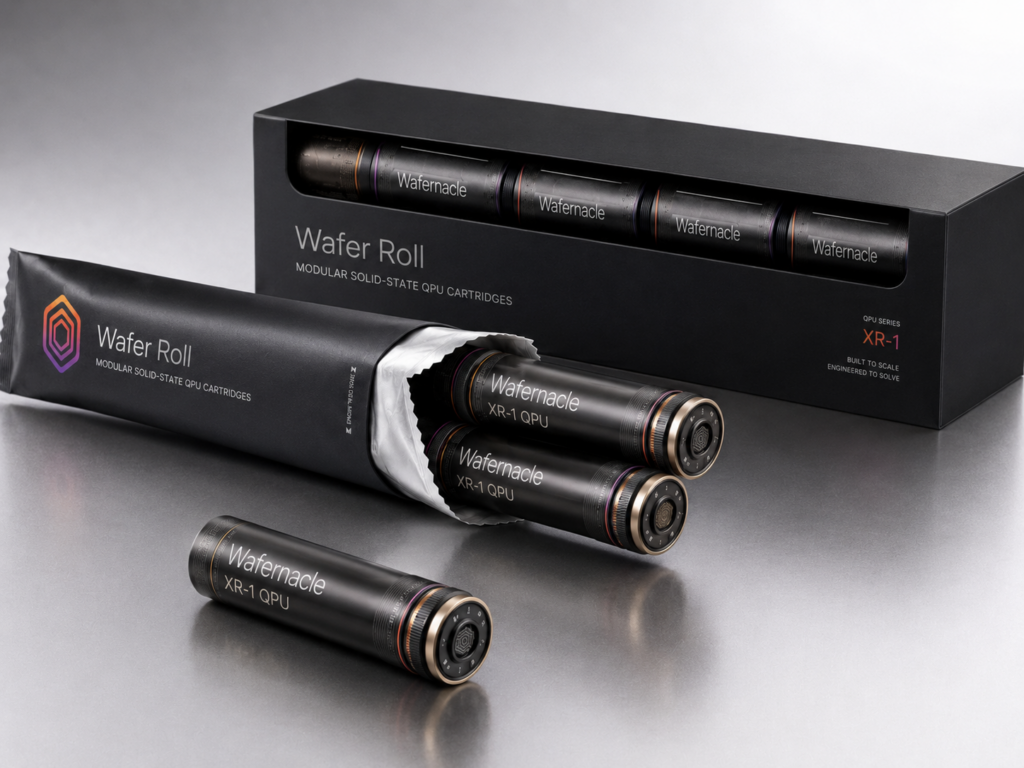
Wafernacle is designed around one simple idea:
As quantum hardware becomes more modular, scalable, and infrastructure-driven, the brand needs to make the product feel tangible, protected, and commercially ready.
The core product is called Wafer Rolls.
These are sealed modular solid-state QPU cartridges designed for protected handling, repeatable deployment, and scalable installation inside a larger cryogenic system called The Chamber.
And because technical environments are operated by actual humans, the brand also includes Cryo Rolls — chilled sweet wafer rolls for the operators working with the system.
Because the machine needs coherence.
The engineers need snacks.
Both are important, depending on how long the calibration process has been acting like a haunted spreadsheet.
The Industry: Solid-State Quantum Computing Hardware
The specific niche here is not “quantum computing” in the broad vague sense.
That is too broad.
The niche is:
solid-state quantum computing hardware, especially modular QPU cartridge systems and the infrastructure around deploying them.
A company in this space might work on:
solid-state qubits
silicon spin qubits
superconducting qubits
quantum processing units
chip-based quantum systems
cryogenic rack infrastructure
modular QPU packaging
quantum control systems
quantum hardware deployment
calibration systems
fault-tolerant quantum architecture
semiconductor-based quantum devices
quantum hardware manufacturing
lab-to-industry quantum infrastructure
This is a serious deep-tech category because the customer is not buying a nice app.
They are buying trust, stability, precision, and technical confidence.
If a small business owner, founder, or agency wants to understand the opportunity, they should think about the people working around quantum infrastructure:
quantum computing startups
semiconductor companies
advanced computing labs
national research labs
deep-tech venture studios
hardware accelerators
cryogenic infrastructure companies
enterprise R&D teams
scientific computing companies
technical investors
government innovation programs
industrial research teams
high-performance computing organizations
These are not casual buyers.
These are technical, cautious, high-stakes audiences.
That means a brand in this industry has to feel credible quickly.
The design cannot look like a random futuristic screensaver.
The name cannot sound like every other “QubitSomething” startup.
The product story has to be specific.
That is why Wafernacle was built as more than a logo.
It was built as a complete brand system that makes a technical quantum hardware concept feel commercially real.
The Wafernacle Concept
Wafernacle is a fictional solid-state quantum computing brand built around modular quantum hardware.
The company creates sealed QPU cartridges called Wafer Rolls.
Each Wafer Roll is designed as a protected, cartridge-ready quantum processing unit that slots into The Chamber, a larger cryogenic rack system.
The name itself carries the industry inside it:
Wafer + Tabernacle = Wafernacle
The “wafer” points to semiconductor materials, silicon, chip manufacturing, and solid-state systems.
The “tabernacle” suggests protection, structure, containment, and something valuable held safely inside a chamber.
Together, the name creates a product world around protected quantum hardware.
The system includes:
Wafernacle — the master brand
Wafer Rolls — sealed modular QPU cartridges
Wafer Roll Pack — the deployment packaging
The Chamber — the larger cryogenic quantum system
Cryo Rolls — chilled sweet wafer rolls for operators
This is where the concept becomes more memorable.
The machines need protected QPU cartridges.
The operators get Cryo Rolls.
That small physical extension gives the brand a human layer.
It is not just design for decoration.
It is positioning.
Wafernacle turns a technical hardware niche into a brand world.
Prompt 1: Research the Solid-State Quantum Computing Industry
Before creating the brand, start with industry research.
The goal is to understand what solid-state quantum computing is, who the buyers are, what the pain points are, and what types of companies already exist in the space.
Use this prompt:
Act as a B2B market research analyst. Research the solid-state quantum computing industry, especially chip-based quantum computing, solid-state QPU hardware, silicon spin qubits, superconducting qubits, cryogenic quantum systems, modular quantum hardware, and quantum infrastructure deployment.

Explain:
1. What the industry does
2. Who the main buyers and stakeholders are
3. What technical and commercial problems companies are trying to solve
4. What products and services exist in the market
5. What opportunities exist for modular quantum hardware
6. What barriers exist for adoption
7. What kinds of companies would buy or partner with this type of product

Write in plain English for a founder or small business owner exploring this market.
This gives you a proper foundation before naming or designing anything.
Otherwise, you are just making pretty hexagons in the dark, which is how half the internet became “AI-powered productivity platforms.”
Prompt 2: Define a Specific Business Idea
Once you understand the industry, narrow it down.
For Wafernacle, the specific business idea is:
A modular solid-state quantum hardware company that builds sealed QPU cartridges for protected handling, repeatable deployment, and scalable installation inside cryogenic rack systems.
Use this prompt:
Act as a startup strategist. I want to build a business concept in the solid-state quantum computing industry.

The idea is a company that creates sealed modular QPU cartridges for solid-state quantum systems. These cartridges should be designed for protected handling, repeatable deployment, scalable installation, and use inside a larger cryogenic rack or chamber.

Help me refine:
1. The one-sentence business description
2. The main customer problem
3. The strongest buyer segments
4. The core product architecture
5. The main commercial benefits
6. The emotional benefit for technical buyers
7. Three possible positioning angles
8. Three possible taglines

Write in clear, founder-friendly language.
This prompt forces the brand to stay tied to a real industry problem.
Prompt 3: Create a Brand Name for This Industry
For technical industries, naming should not be random.
It should connect to the category, the customer problem, and the emotional angle.
Wafernacle works because it connects:
wafer-based hardware
solid-state quantum systems
protected chambers
modular cartridges
a memorable product world
Use this prompt:
Act as a naming strategist for B2B deep-tech and quantum computing companies.

Create 30 brand name ideas for a solid-state quantum computing hardware company that builds modular QPU cartridges and cryogenic quantum infrastructure.

The brand should feel:
technical
premium
memorable
serious
slightly unusual
commercially usable
strong enough to support hardware, software, packaging, investor materials, and operator-facing brand extensions

For each name, explain:
1. What the name means
2. Why it fits the quantum hardware category
3. What emotional association it creates
4. Whether it sounds more enterprise, technical, premium, or playful
5. Any possible risks or confusion

Avoid names that sound like generic AI, SaaS, or crypto startups.
Then, if you want to analyze a name like Wafernacle:
Analyze the brand name Wafernacle for a solid-state quantum computing hardware company.

Explain how the name combines wafer and tabernacle. Analyze how it connects to semiconductor wafers, protected quantum cores, modular QPU cartridges, and cryogenic chamber systems.

Suggest:
1. Positioning statements
2. Taglines
3. Product names
4. Campaign lines
5. Risks or limitations of the name
6. Ways to make the name feel serious and credible
Prompt 4: Build the Industry-Specific Brand Strategy
Now you can ask AI to build the positioning around the exact market.
Use this prompt:
Act as a senior brand strategist specializing in deep-tech, quantum computing, semiconductor hardware, and advanced B2B infrastructure companies.

Build a brand strategy for Wafernacle, a solid-state quantum computing hardware company that creates sealed modular QPU cartridges called Wafer Rolls.

The cartridges slot into a larger cryogenic rack system called The Chamber.

Include:
1. Category definition
2. Positioning statement
3. Core brand promise
4. Target buyers
5. Buyer pain points
6. Emotional insight
7. Practical benefits
8. Brand personality
9. Tone of voice
10. Messaging pillars
11. Tagline options
12. Sales angle for technical buyers
13. Sales angle for investors
This is where the brand becomes commercially useful, because the messaging is tied to the actual buyers in the industry.
Prompt 5: Create the Visual Identity Direction
For this industry, the visual identity should not feel like a generic futuristic app.
It should feel connected to quantum hardware, semiconductors, modularity, protected systems, and precision engineering.
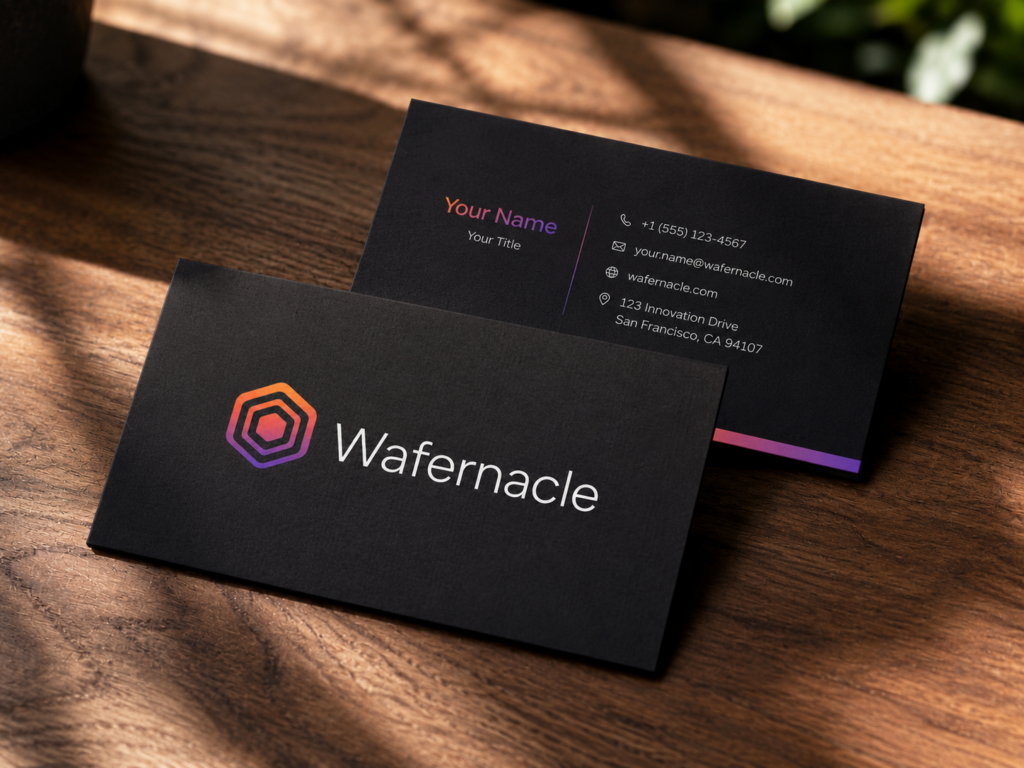
Use this prompt:
Act as a creative director for a premium deep-tech hardware brand.

Create a visual identity direction for Wafernacle, a solid-state quantum computing company that builds modular QPU cartridges called Wafer Rolls.

The visual identity should feel:
premium
technical
minimal
structured
controlled
precise
scalable
modern
serious but memorable

The brand should avoid generic quantum clichés such as glowing atoms, random particle clouds, blue wave graphics, and overused sci-fi UI patterns.

Develop:
1. Logo concept
2. Symbol meaning
3. Typography direction
4. Color palette
5. Packaging style
6. Website style
7. Product photography direction
8. Factory signage direction
9. Business card direction
10. Visual motifs

Use the following concepts:
wafer
protected quantum core
nested chamber
modular cartridge
solid-state hardware
cryogenic system
precision engineering
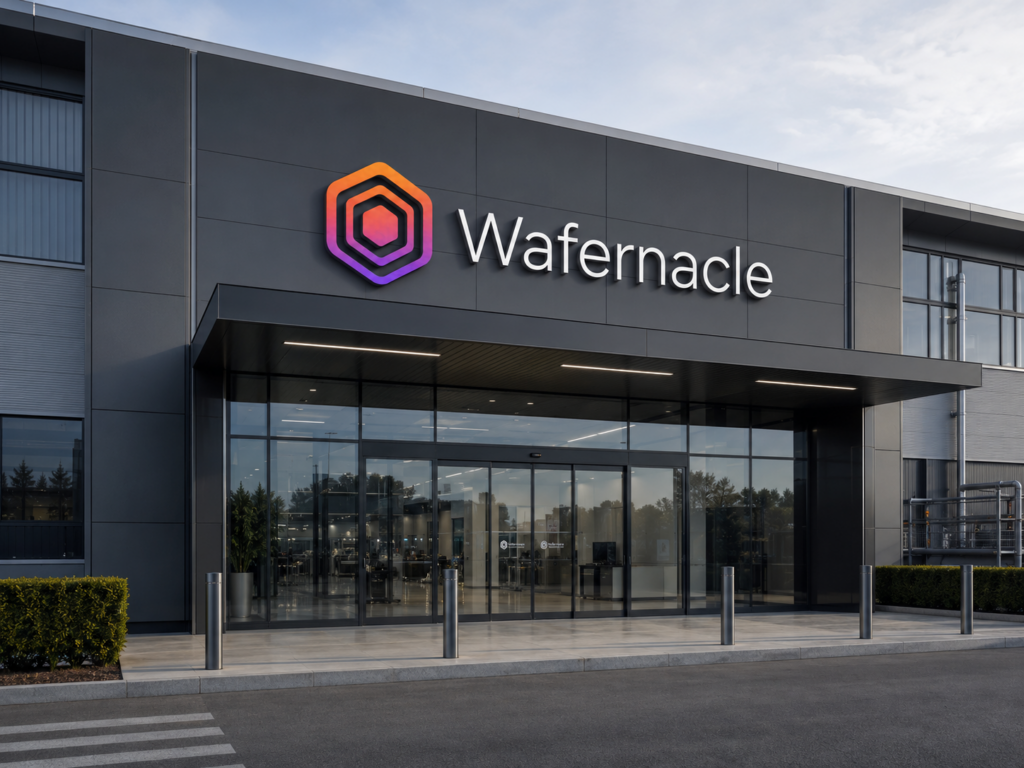
For Wafernacle, the final visual identity uses a nested hexagon symbol.
The outer shape represents The Chamber.
The middle shape represents the cartridge housing.
The inner shape represents the protected quantum core.
That is much better than a random glowing atom, because the mark is tied to the product architecture.
Prompt 6: Create Industry-Specific Mockup Ideas
The mockups should show Wafernacle inside the world of quantum hardware, not just on random business cards.
Use this prompt:
Act as a creative director building a pitch-ready brand presentation.

Suggest 20 mockups for Wafernacle, a solid-state quantum computing hardware brand that sells modular QPU cartridges called Wafer Rolls.

The mockups should make the company feel real to:
technical founders
investors
enterprise buyers
research partners
hardware teams
conference audiences

Include mockups for:
website hero
Mac desktop landing page preview
Wafer Roll product packaging
QPU cartridge product photoshoot
The Chamber rack system
factory entrance signage
business cards
leather embossing
operator kit
Cryo Rolls packaging
high-tech office canteen display
investor deck cover
conference booth
technical sales sheet
hardware label system
shipping box
installation guide
dashboard UI concept
founder pitch slide
social media launch post

For each mockup, explain why it matters and what business message it communicates.
This helps the brand feel like a system, not a single logo floating in space.
Prompt 7: Generate a Product Mockup for This Industry
For example, a premium product photoshoot of the Wafer Rolls cartridges:
Create a high-fidelity premium product photoshoot for Wafernacle, a solid-state quantum computing hardware brand.

Show a refined studio product scene featuring:
1. A matte black Wafer Roll Pack box
2. Several cylindrical QPU cartridges
3. One opened wrapper-like cartridge package
4. Premium dark graphite materials
5. Subtle orange-to-purple brand accents
6. The Wafernacle nested hexagon logo
7. Clean typography reading Wafer Roll and Modular Solid-State QPU Cartridges

The product should look like modular quantum hardware packaged with the structure of premium wafer rolls, but it must remain serious, realistic, and businesslike.

Use soft studio lighting, subtle reflections, minimal background, and a premium deep-tech product photography style.

Do not make it look like candy.
Do not make it cartoonish.
Do not misspell Wafernacle.
The image should communicate:
This is not an abstract quantum idea. This is a product system.
Prompt 8: Build a Human-Facing Brand Extension
This is where Wafernacle becomes more memorable.
For Wafernacle, the human-facing extension is Cryo Rolls — chilled sweet wafer rolls for operators.
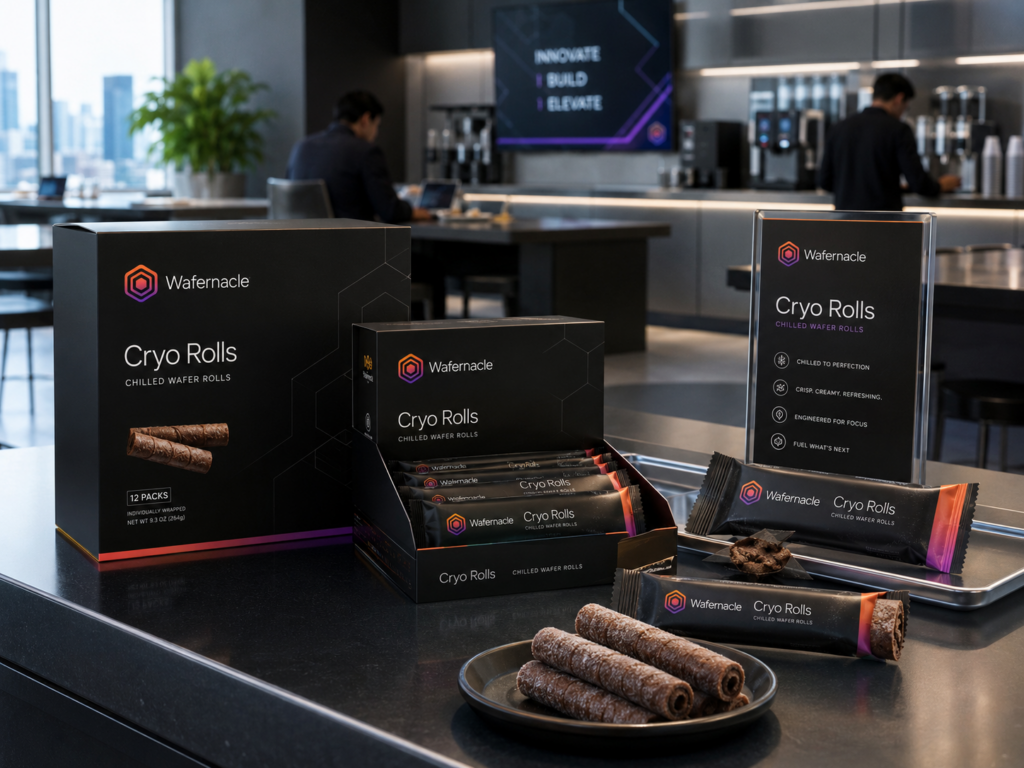
Use this prompt:
Create a human-facing brand extension for Wafernacle, a solid-state quantum computing hardware company.

The main product is Wafer Rolls, sealed modular QPU cartridges.

Create a secondary product called Cryo Rolls: chilled sweet wafer rolls included in operator kits, deployment packs, conference giveaways, and high-tech office canteens.

The extension should:
1. Feel premium and branded
2. Support the main brand story
3. Create a memorable physical ritual
4. Avoid making the company look unserious
5. Connect to the idea that quantum systems need coherence and engineers need focus
6. Include product positioning
7. Packaging direction
8. Campaign lines
9. Use cases
10. Risks and how to avoid making it too silly
This is where the concept becomes sticky.
The machine gets the QPU cartridge.
The operator gets the Cryo Roll.
That is a small detail people remember.
Prompt 9: Turn the Industry Concept Into a Pitch
Once the brand exists, AI can help turn it into a sales or investor pitch.
Use this prompt:
Act as a pitch strategist for deep-tech and quantum computing companies.

Create a pitch for Wafernacle, a solid-state quantum computing hardware company that builds sealed modular QPU cartridges called Wafer Rolls.

Explain:
1. The industry problem
2. Why quantum hardware needs better modularity
3. How Wafer Rolls solve the problem
4. How The Chamber supports scalable deployment
5. Why protected handling matters
6. Why repeatable deployment matters
7. Who the buyers are
8. How the company could make money
9. How the Cryo Rolls operator ritual makes the brand more memorable
10. Why this brand could be pitched to investors, research labs, hardware partners, and technical buyers

Make the pitch clear, premium, and persuasive.
This is the important part for small businesses, consultants, and founders.
Once the brand exists, it can become:
a sales pitch
an investor pitch
a website
a product story
a campaign idea
a conference concept
a commercial offer
That is why brand-building with AI can be so useful.
Not because AI makes a logo.
Because AI helps you build a complete commercial idea around a specific market.
Why This Industry Is a Good Example for Small Businesses
The solid-state quantum computing industry is useful as a teaching example because it shows how AI can help turn an intimidating technical category into a clear brand system.
This is not:
“Make me a futuristic tech logo.”
It is much more specific:
Build a brand for a solid-state quantum hardware company serving technical buyers who care about protected handling, modular deployment, repeatable installation, cryogenic infrastructure, QPU scalability, and commercial credibility.
That specificity makes everything better.
The name becomes sharper.
The messaging becomes clearer.
The visuals become more relevant.
The mockups become more believable.
The pitch becomes easier to understand.
The commercial opportunity becomes more obvious.
That is the lesson for small businesses using AI.
Do not ask AI to create a brand in a vague category.
Ask it to create a brand inside a specific industry, for a specific buyer, solving a specific expensive problem.
That is how you get from generic AI branding to something like Wafernacle:
a solid-state quantum computing brand that makes modular QPU hardware feel protected, scalable, memorable, and commercially ready.
Final Thought
Technical founders do not need brands that make them look less technical.
They need brands that make the technical value easier to understand.
Wafernacle does that by turning quantum hardware into a clear product system:
Wafer Rolls.
The Chamber.
Cryo Rolls.
A protected quantum core.
A scalable hardware architecture.
A brand people can remember.
Your technology can be complex.
Your brand should not be confusing.
Wafernacle
Built on silicon.
Sealed for coherence.
Ready to scale.